They are clueless about what they're
photographing. They assume that all scenes have the same average tonal value—
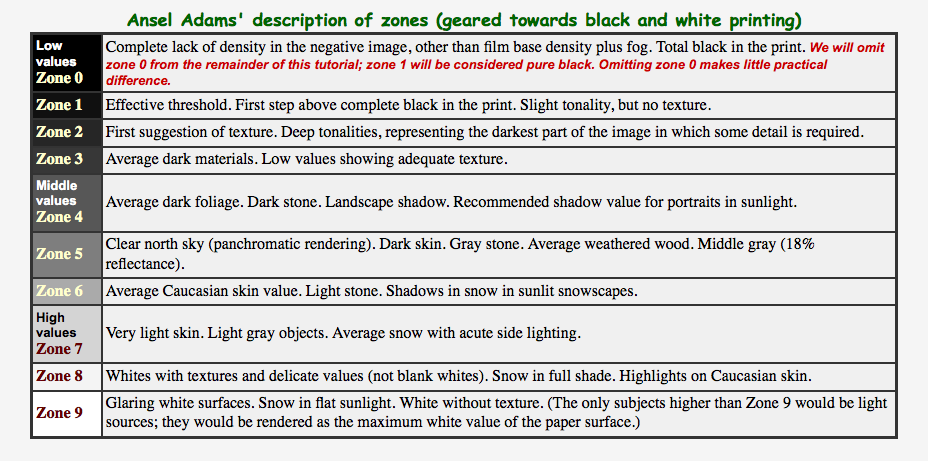
middle gray— roughly zone 5 in the chart below.
If a scene is different, for example a snow scene, it
will be exposed incorrectly. It will come out middle gray— underexposed.
If you follow the meter's reading, every scene
will have the same average middle gray density. You'll get lots of bad
exposures.
Ansel Adams developed
the Zone system. His technique was to carefully study a scene, visualize the
final print, then determine the correspondence between portions of the scene
and tones in the print. He would then meter, expose the image.
Digital photographers must be ever vigilant; they must
pay attention to highlights when setting exposure.
You can correct color, adjust contrast, and apply tonal
response in software
The key to the Zone system is visualizing how you want
areas of the scene to appear in the final image, or in the language of the Zone
system, where you want to "place" them.
The Zone system can then be expressed in a single
statement: Select an area of the scene, meter it, then adjust the exposure
by the difference between the zone you want in the final image and zone 5
(middle gray).

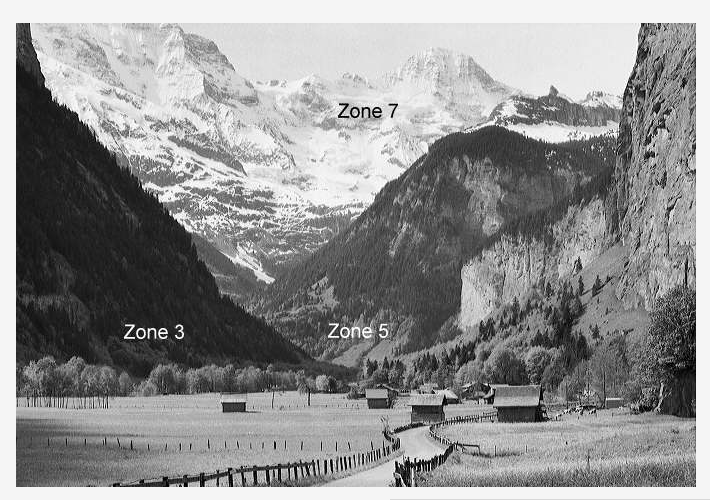
For example, suppose you want to place the snowy mountains in scene below at zone 7. Meter them, then increase the exposure by two f-stops, i.e., if the meter says 500 at f/16, expose at 250 at f/11.
For this class, we have to do two exercise, for the first exercise, we have to choose 3 different subject matters of varying tones.
Tint, Tone &
Shade
Photograph:
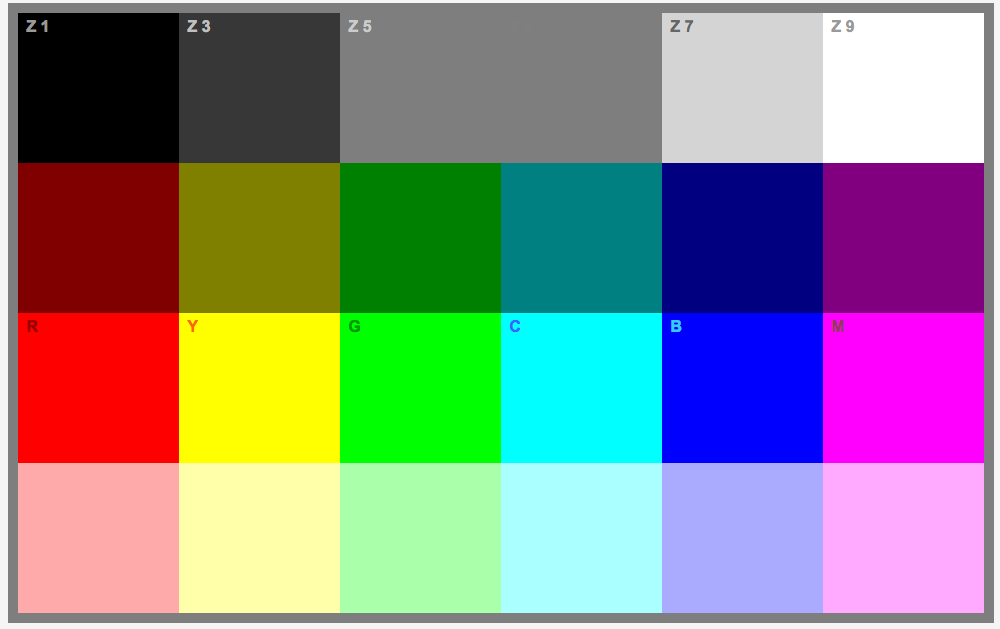
1.An Image that has different shades of White
2.An Image that has varrying shades of grey (middle tones)
3.An Image that has varying shade within a dark area.
This is the exercise that I did for this class.


This exercise allow us to know that the camera will adjust the colour of the area that we want to take picture and we can adjust it a bit to let it looks like that same with the original color.
In this exercise I had learnt that we can change the aperture, ISO, shutter speed to try to take a good shoots.

没有评论:
发表评论